

Rezzella
For the planet
We believe clothing for a hotter world should be made only when it is wanted, packed in paper and worn for years. This page sets out what we do, and every fact on it links to its source.
The planet is getting hotter
The World Meteorological Organization’s State of the Global Climate 2025 found that 2025 was about 1.43 °C warmer than the 1850 to 1900 average, and that the eleven years from 2015 to 2025 were the eleven warmest on record.1
Much of the world already lives in strong sun for most of the year. Clothing should be made for the sun we actually live in.
Make only what is wanted
Much of the clothing industry still makes on a guess. The European Environment Agency puts the average share of textile products that go unsold at about 21%, and estimates that 4 to 9% of all textile products put on the market in Europe are destroyed before use.3
We make to order instead: Reserve for free → The run fills (50 pieces) → Pay when we confirm the date → Delivered in about four weeks.
Nothing is made until it is reserved, so nothing is wasted. What we make is what people asked for.
Paper, not plastic
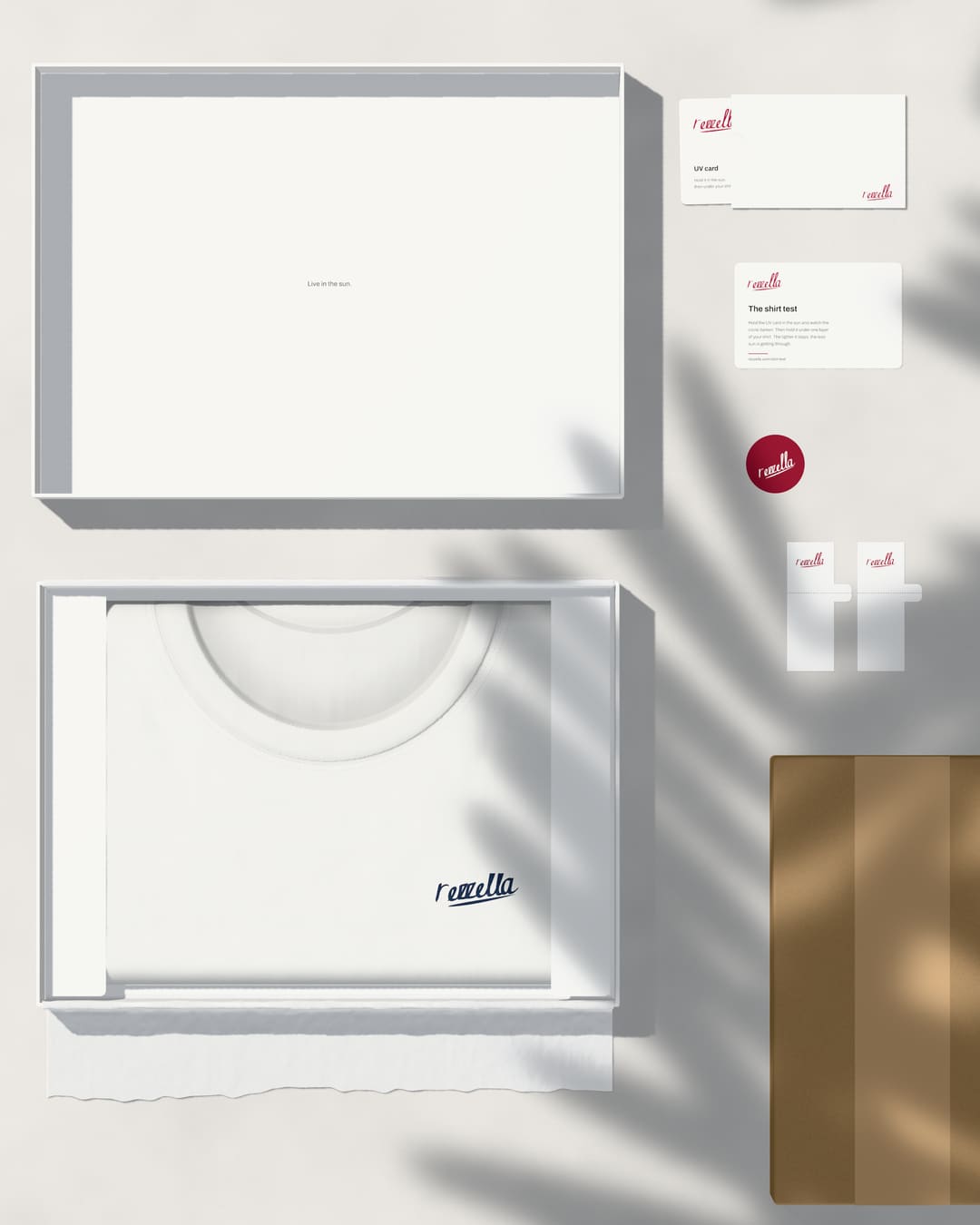
Your piece arrives in a thin white paper box, wrapped in paper, with the UV card on top. We made the box to be kept and used again, not thrown away on the day it arrives.
Made to last
The most useful thing clothing can do for the planet is to be worn for a long time. We would rather you wear one piece for years than replace five.
Every piece has its care guide on its own page: wash cold, line dry, no bleach and no tumble dryer.
What we will publish
The full lab report for our fabric. Our fabric goes to ARPANSA, Australia’s radiation protection agency, for testing to AS/NZS 4399 before the first run. The full report goes on the shirt test page. Until the report is published, we say only this: made to block the sun.
The care guide for every piece, on its own page. And the source for every fact we use, as on this page.
Sources
- World Meteorological Organization: State of the Global Climate 2025, press release of 23 March 2026
- NASA Goddard Institute for Space Studies: GISS Surface Temperature Analysis (GISTEMP v4), annual global means, 1880 to 2025
- European Environment Agency: The destruction of returned and unsold textiles in Europe’s circular economy, 4 March 2024
- Hawaii State Legislature: Act 104, Session Laws of Hawaii 2018 (sunscreens containing oxybenzone or octinoxate)
- ECOLEX (FAO, IUCN and UNEP): Republic of Palau, Responsible Tourism Education Act of 2018
Sources last updated 5 November 2026.